Die Vulkanisation ist der wichtigste Prozess in der Gummiherstellung. Sie wandelt weichen, plastischen Rohgummi in elastische, langlebige und formstabile Fertigprodukte um. Die präzise Temperaturkontrolle während der Vulkanisation bestimmt maßgeblich die physikalischen Eigenschaften, die Dimensionsstabilität und die Lebensdauer von Gummischläuchen, Dichtungen und kundenspezifischen Gummiteilen und ist somit der zentrale Maßstab für hochwertige Gummiprodukte.
Die Vulkanisationstemperatur ist entscheidend für die Ausbildung molekularer Vernetzungsstrukturen im Kautschuk. Jedes Kautschukmaterial hat seinen spezifischen Vulkanisationstemperaturbereich. EPDM und NBR werden üblicherweise bei 140–160 °C vulkanisiert, um eine gleichmäßige Vernetzung zu gewährleisten. Silikonkautschuk erfordert eine Primärvulkanisation bei 160–180 °C und eine Hochtemperatur-Sekundärvulkanisation zur Entfernung von Restverunreinigungen. FKM-Fluorkautschuk benötigt eine Vulkanisation bei höheren Temperaturen, um eine ausgezeichnete Wärme- und Korrosionsbeständigkeit zu erzielen.
Eine unzureichende Temperaturregelung führt zu irreversiblen Qualitätsmängeln. Zu hohe Temperaturen verursachen Versengung des Gummis, Oberflächenrisse, erhöhte Härte und verringerte Zähigkeit. Zu niedrige Temperaturen führen zu unzureichender Vulkanisation, unvollständiger molekularer Vernetzung, geringer Druckfestigkeit, leichter Verformung und Alterungsschäden der Produkte.
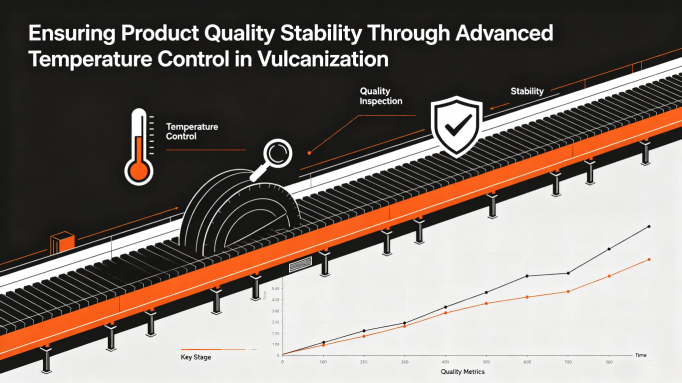
Um eine gleichbleibende Qualität zu gewährleisten, setzen wir auf eine durchgängige Temperaturregelung und eine stufenweise Vulkanisationstechnologie. In Verbindung mit unserem Qualitätsmanagementsystem nach IATF 16949 standardisieren wir Temperatur-, Druck- und Zeitparameter für verschiedene Gummimaterialien und Produktspezifikationen. Echtzeit-Temperaturüberwachung und Stichprobenprüfungen eliminieren effektiv Abweichungen in der Produktleistung.
Durch wissenschaftliches Temperaturmanagement bei der Vulkanisation werden gleichbleibende Elastizität, Dichtungsleistung, Alterungsbeständigkeit und Maßgenauigkeit der Endprodukte gewährleistet. Dies reduziert Produktausfallraten und Wartungskosten für Anlagen in der Automobil-, Industrie- und Klimatechnik erheblich. Dank präziser Prozesssteuerung bieten wir Abnehmern weltweit hochstabile und langlebige Gummilösungen.




 Onlineservice


